
SEARCH INTENT
Match What People Need
I improve search intent alignment, page structure, content relevance, titles, internal linking and technical page signals so important pages communicate their purpose more clearly across Google and modern search experiences.
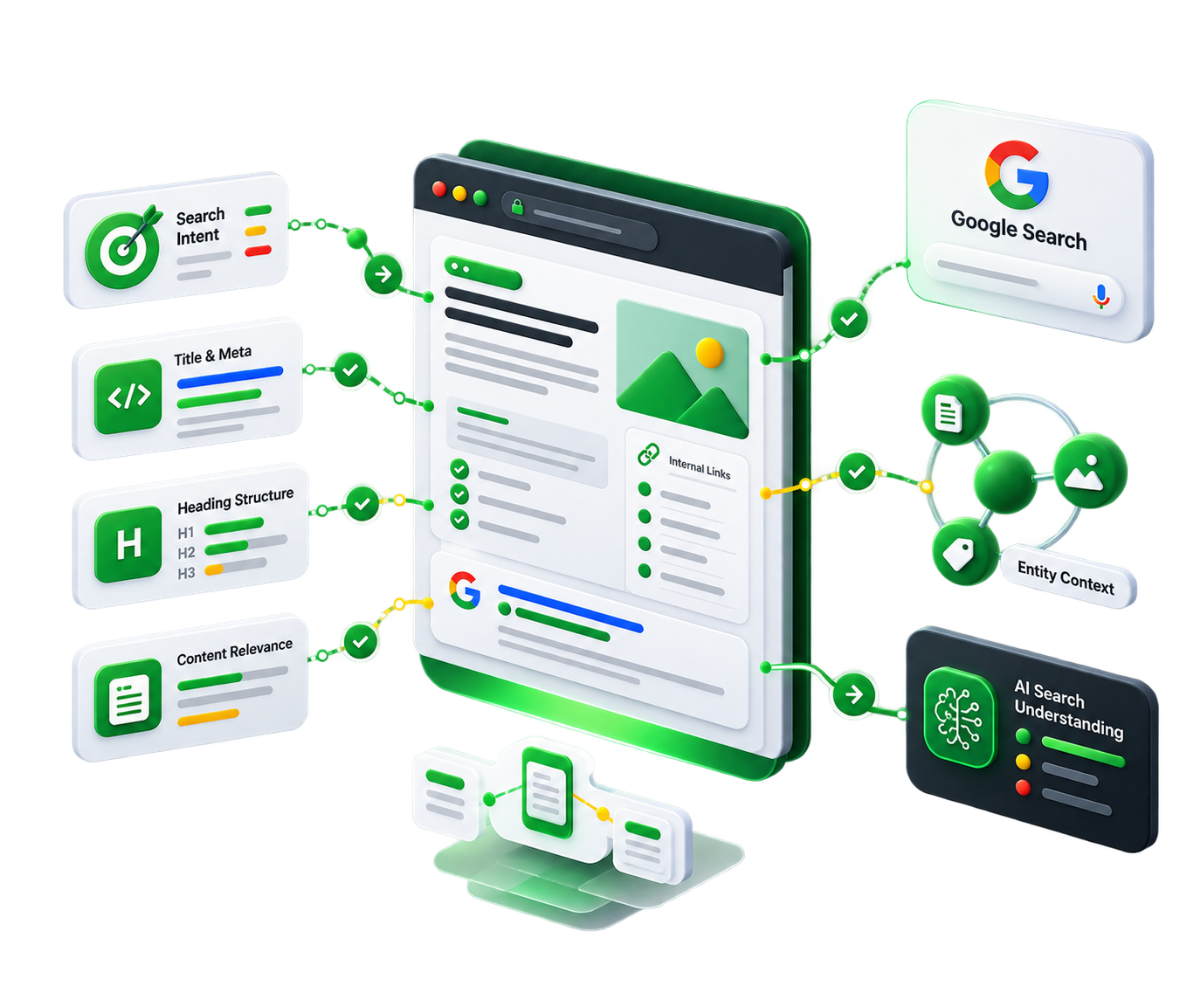
A page can look polished to visitors and still be unclear about the search intent it serves, the topic it should represent or how it connects with the rest of the website.
Content can be well written but still miss the purpose behind the query the page is expected to satisfy.
Headings, sections and supporting information should reinforce one clear page topic instead of competing for attention.
Internal links help reinforce context, relationships and paths between important pages across the website.
Titles and descriptions should represent the page accurately while giving searchers a clear reason to choose it.
Stronger on-page SEO creates a clearer connection between search intent, page content, internal relationships and search understanding.
I improve the page-level signals that help important pages communicate their purpose more clearly to search engines and the people landing on them.
Strengthen the page around the intent and topic it should represent.
Refine page titles and descriptions so they better reflect the page and attract relevant clicks.
Improve page structure so important sections support one clear topic and user journey.
Improve useful page content around the subject, supporting details and real search needs.
Improve relevant internal links so priority pages sit within a clearer website structure.
Reinforce how the page, topic and related information fit together across the website.
The goal is not to add more SEO elements for the sake of it. It is to make important pages more relevant, better connected and easier to choose.
Stronger alignment helps the page represent the right topic and search need.
Searchers get a clearer idea of what the page offers before they visit it.
Relevant page connections support clearer navigation and website context.
Clearer structure helps visitors move through the page without unnecessary friction.
I keep the process practical: identify what is holding priority pages back, improve the important signals and then check the result.
I review priority pages for relevance, structure, search presentation, content clarity and internal connections.
I improve the parts that need attention so the page becomes clearer, more relevant and better connected.
After improvement, I review the page again to make sure the important elements are working together as intended.
Clear answers to the main questions businesses usually have before starting on-page SEO work.
The work is based on your website, priority pages and search goals rather than a generic SEO checklist.
You work directly with Vikash throughout the review and improvement process.
I review and improve priority page elements such as search intent alignment, titles, page structure, content relevance, internal linking and page context.
Yes. Existing pages can often be improved without rebuilding them completely. I focus on strengthening the areas that need better relevance, structure or search clarity.
No SEO service can guarantee rankings. Strong on-page SEO helps create clearer, more relevant pages that support the wider search strategy.
The scope depends on the website and priorities. I normally focus first on the pages that are most important for search visibility, services, leads or business growth.
Yes. In many cases the existing design can remain while the page structure, content signals and internal relationships are improved around it.
If important pages are not performing as expected, I can review their on-page SEO and identify where stronger relevance, structure and page connections could help.